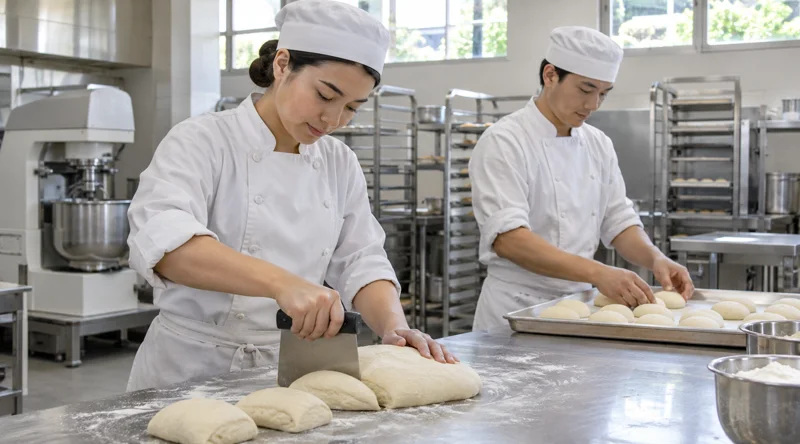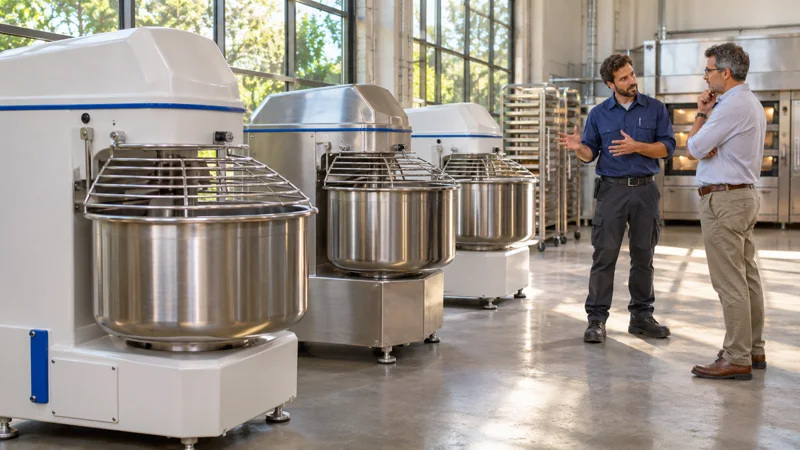
A production line requires every handover point to be reviewed together.
Selecting industrial bakery equipment requires simultaneous consideration of front-end flour supply, mixing batches, and downstream receiving. A suitably sized dough mixer does not mean the entire line is matched; discharge port position, receiving height, conveying method, and production rhythm also determine the configuration.
The TRONP catalog covers bottom-discharge twin twist-arm dough mixers, smart constant-temperature horizontal dough mixers, automatic flour feeding systems, and dough conveying and dividing equipment. Equipment combinations and interfaces can be confirmed section by section based on actual formulas and workshop conditions.
Clarify the flour feeding method, batch dosing requirements, and upstream interfaces.
Check the mixing cycle against downstream receiving capacity; avoid comparing only standalone machine capacity.
Incorporate discharge position, receiving height, and conveying direction into the layout drawing.
Organize the four-stage production process around the mixing station.
- 1
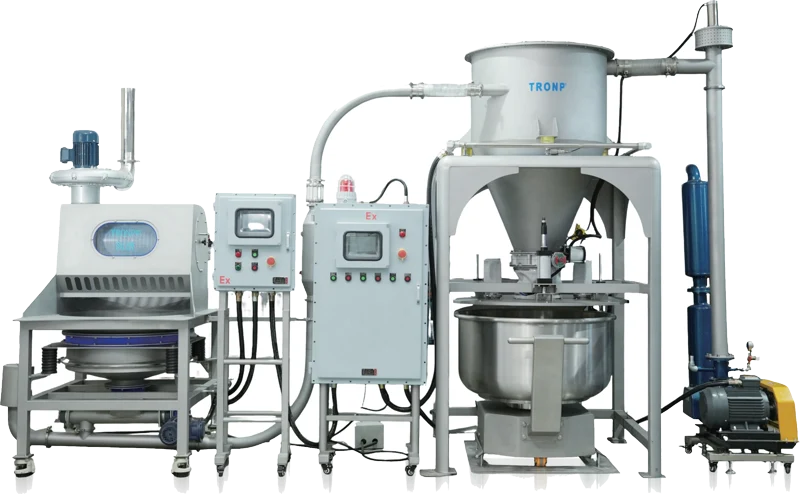
Flour Feeding and Dosing
Determine the raw material conveying route and feeding interface.
- 2
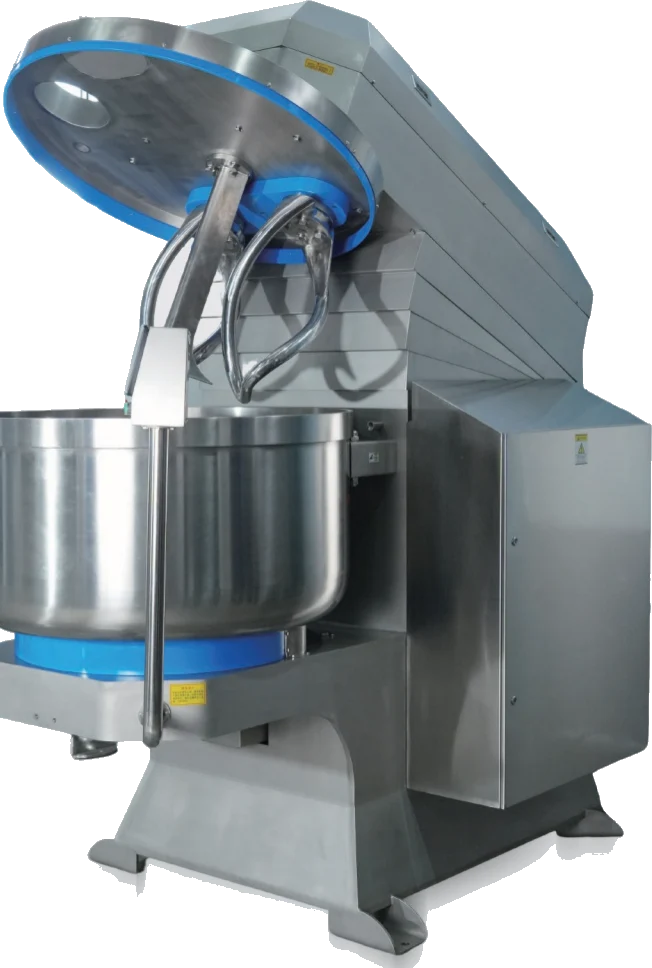
Mixing and Process Control
Compare bottom-discharge or horizontal equipment according to the formula.
- 3
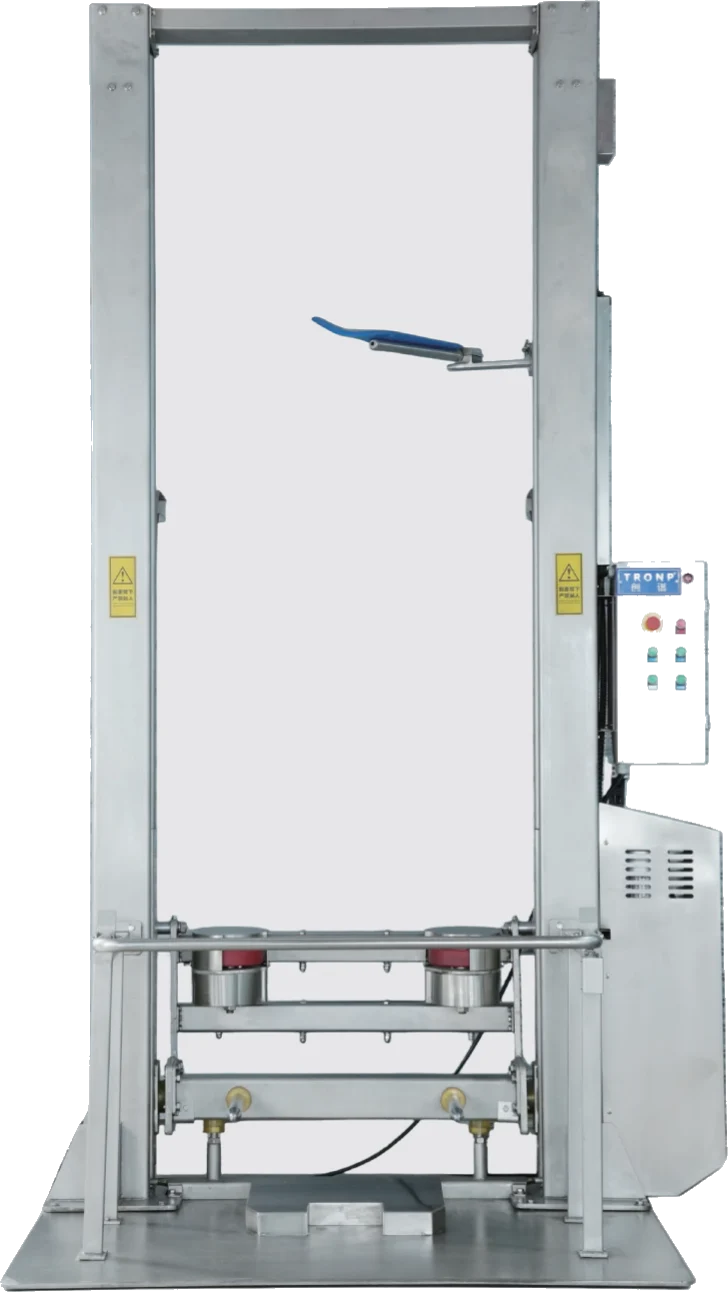
Discharge and Connection
Check the receiving port and select lifting equipment as needed.
- 4
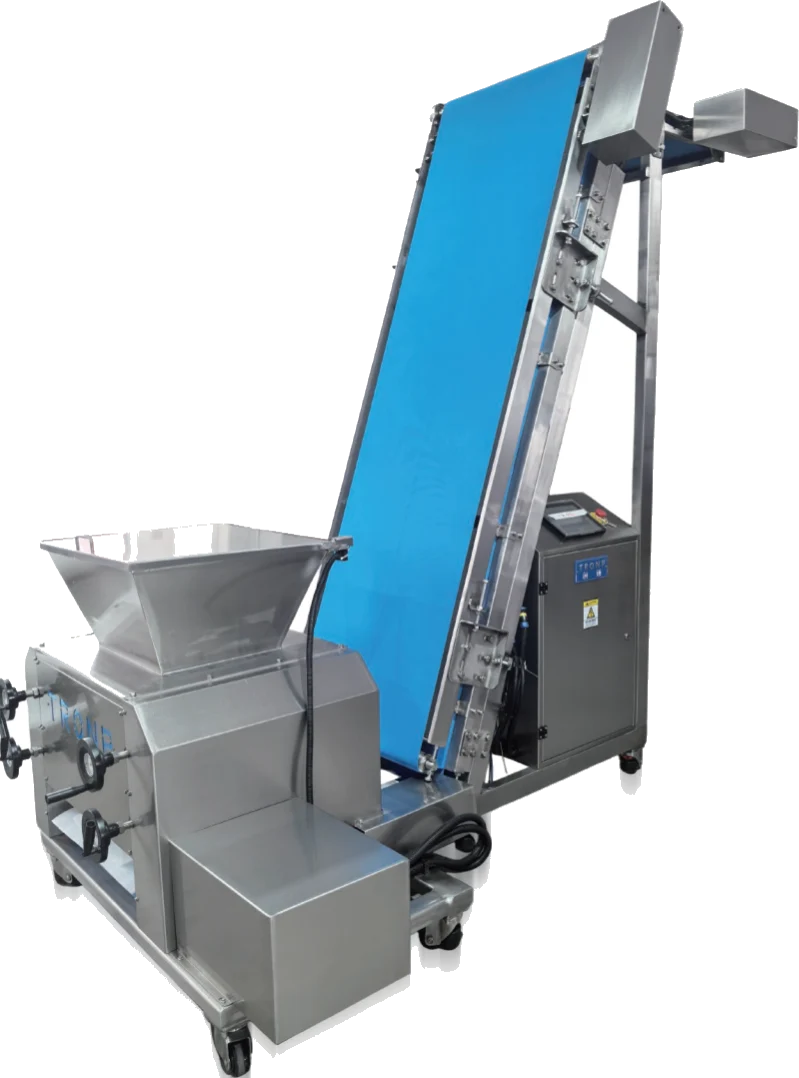
Conveying and Dividing
Connect to subsequent dough handling and forming processes.
This process is a selection schematic and does not represent a completed whole-line design. Equipment interfaces, interlocked control, and production cycle must be confirmed for each project.
First define the core mixing station, then equip the upstream and downstream sections.
Connecting the Line Through Bowl-Bottom Discharge
Bottom-Discharge Twin Twist-Arm Dough Mixer
The catalog introduces direct bowl-bottom discharge, twin twist-arm mixing, PLC variable-frequency speed control, and dough temperature monitoring. It is suitable for layout evaluation around below-level receiving and subsequent conveying stations.
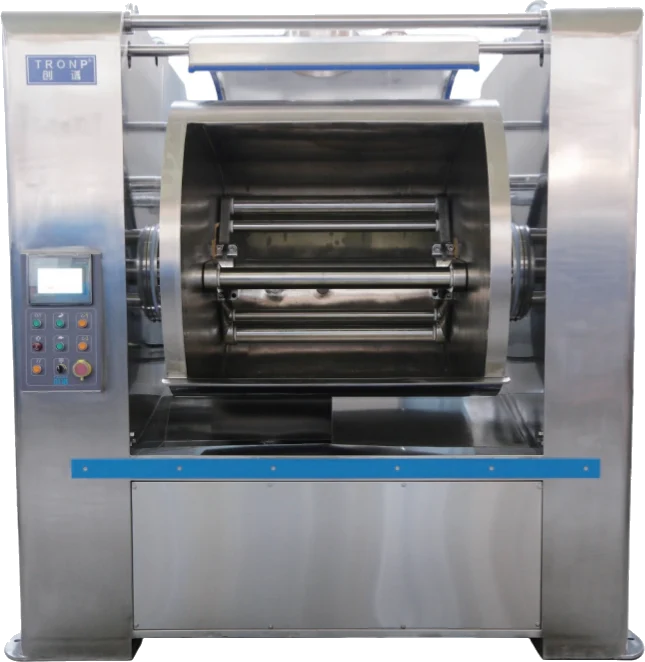
Organizing the Process with a Horizontal Structure
Smart Constant-Temperature Horizontal Dough Mixer
The catalog lists features such as trough cooling, 120° tilting trough discharge, and multiple agitator specifications. The equipment must be checked against the formula, discharge container, and tilting clearance.
Passing the Dough to the Next Process
Dough Conveyor and Divider
Determine the receiving relationship based on the mixer's discharge method, then confirm conveying direction, belt width, and the requirements of subsequent stations. Whole-line capacity must be calculated together with the upstream and downstream sections.
Compare the two types of mixing equipment using their respective capacity metrics.
The bottom-discharge series lists dry flour capacity; the horizontal series lists the mixing capacity stated in the catalog. The two metrics are not directly equivalent. Please verify them with the formula during selection.
| Series / Direction | Model / Equipment | Capacity (Catalog Metric) | Rated Power |
|---|---|---|---|
| Bottom Discharge | TP-SGTD-300 | Dry flour 150 kg | 24.2 kW |
| Bottom Discharge | TP-SGTD-400 | Dry flour 200 kg | 33 kW |
| Bowl bottom discharge | TP-SGTD-500 | Dry flour 250 kg | 41 kW |
| Constant-temperature horizontal | TP-WS-220 | Mixing capacity 50–100 kg | 23.5 kW |
| Constant-temperature horizontal | TP-WS-300 | Mixing capacity 100–150 kg | 32.2 kW |
| Constant-temperature horizontal | TP-WS-400 | Mixing capacity 150–200 kg | 39.2 kW |
| Constant-temperature horizontal | TP-WS-500 | Mixing capacity 200–250 kg | 48 kW |
| Constant-temperature horizontal | TP-WS-600 | Mixing capacity 250–300 kg | 58 kW |
Parameters are taken from the TRONP 2026 Product Manual. They are used here for preliminary selection; specific specifications, configurations, and applicable processes are subject to technical confirmation.
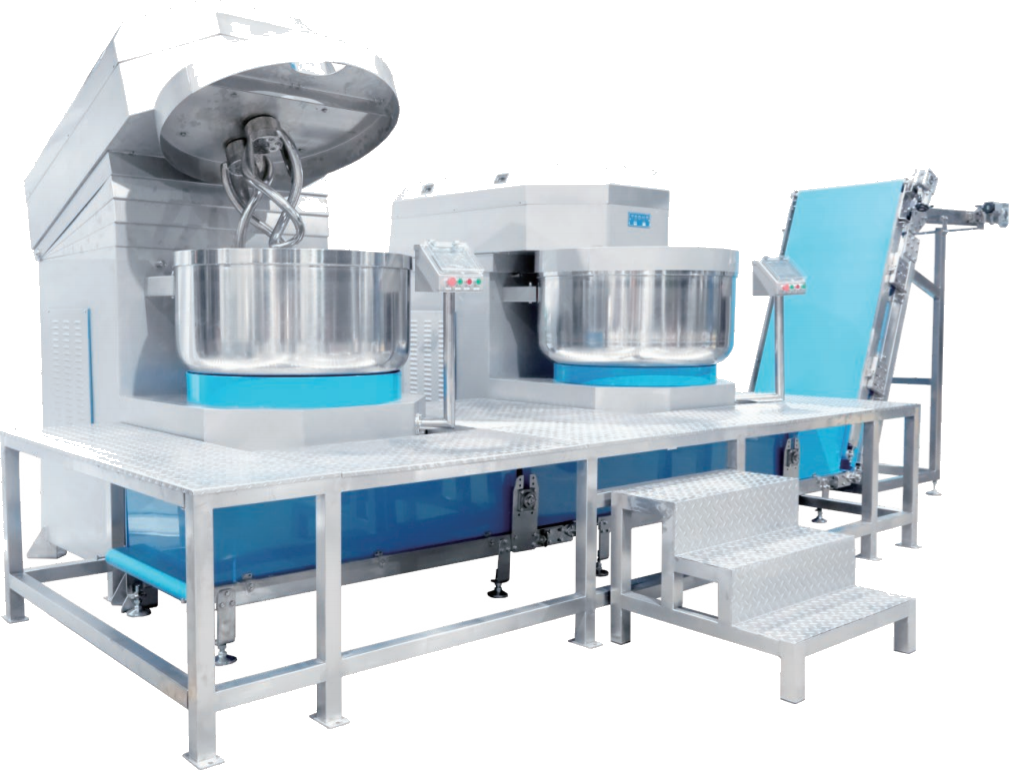
First clarify the handoff relationships, then determine the complete line configuration.
Place the dough mixing equipment, operating platforms, receiving devices, and conveying equipment on the same layout drawing, and verify operator access and maintenance paths. For retrofits of existing production lines, existing equipment interfaces and site dimensions must also be provided.
- Upstream: flour supply capacity, feeding method, and ingredient path.
- Midstream: recipes, batch capacity, and complete dough mixing cycle.
- Downstream: receiving height, conveying direction, and processing pace.
Prepare a complete set of process conditions for production line communication.
Before the selection discussion, organize the following conditions item by item and supplement them with actual data to facilitate confirmation of the equipment and configuration.
- Organize the main recipes and ingredient quantity per batch
- Record current production cycles and target pace
- Provide the workshop floor plan and equipment entry dimensions
- Confirm the flour supply method and upstream interfaces
- Measure the downstream receiving height and conveying direction
- Confirm requirements for water and power, temperature control, and linked control configuration
Confirm these details again before selection.
Can bowl-bottom-discharge and horizontal dough mixers be interchanged directly?
The two differ in structure, capacity labeling, and discharge method. They must be evaluated separately based on the recipe, receiving relationship, workshop space, and process requirements, and cannot be replaced solely according to the model number.
Does every production line need a flake ice machine?
It should be decided based on the recipe and temperature control plan. The constant-temperature intelligent dough mixer in the manual has its own temperature control configuration; whether other equipment needs flake ice or other cooling support must be confirmed in connection with the process and should not be added by default.
What should be provided for retrofitting an existing production line?
It is recommended to provide the equipment layout, photos of existing interfaces, receiving height, conveying direction, production cycle, and target throughput. Confirm the connection conditions first, then determine the equipment model and scope of supply.
Parameter and equipment references: Manual pages 09–10 (bowl bottom discharge), pages 11–12 (constant-temperature horizontal), pages 27–28 (lifting series), pages 29–30 (automatic flour feeding), pages 31–32 (conveying/dividing and flake ice machines).
The page numbers in the text refer to the printed page numbers of the manual; the application recommendations are selection ideas organized based on equipment functions, and the scene schematics do not represent delivered customer cases.