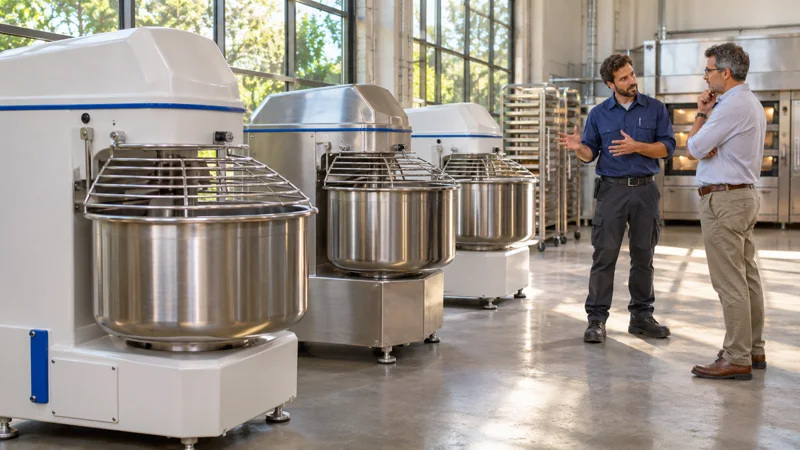
First sort out the discharge process, then determine the dough mixing equipment.
The dough mixing station in a central kitchen connects ingredient preparation, dough production, and subsequent forming. When selecting equipment, in addition to the flour amount per batch, also consider where the dough goes after leaving the bowl, who transfers it, and when the next station can receive it.
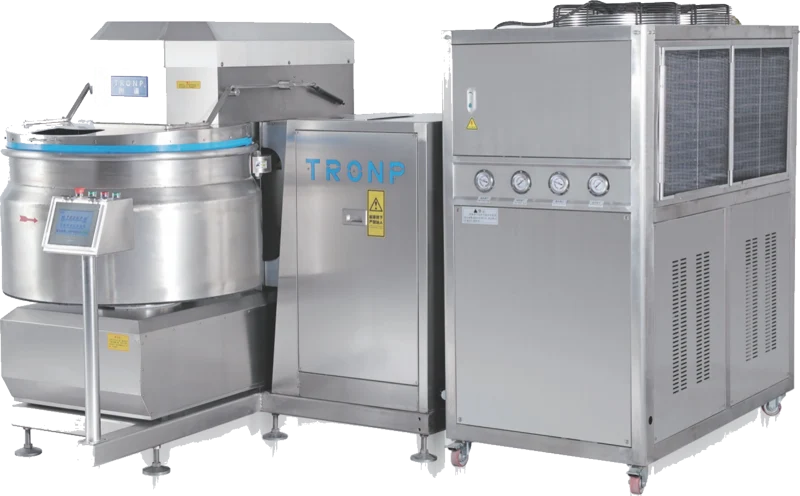
The TRONP manual offers equipment including standard, smart bowl-tilting, and constant-temperature smart models. You can choose a discharge path based on your existing process, then determine the model according to recipes, batches, and site conditions; add corresponding supporting equipment when lifting or conveying is required.
Record the flour amount per batch during peak periods, distinguishing flour weight from total dough weight.
Define the target dough temperature at discharge, then determine whether active temperature control and recipe management are needed.
Draw receiving containers, bowl-tilting space, and transfer routes on the same floor plan.
From preparation to transfer, make station handoffs clearer.
- 1
Preparation and loading
Verify the recipe, batch flour amount, and water addition requirements.
- 2
Dough mixing and process control
Select the standard, tilting, or constant-temperature series according to the recipe.
- 3
Discharge and transfer
Connect with receiving carts, turnover containers, or the next station.
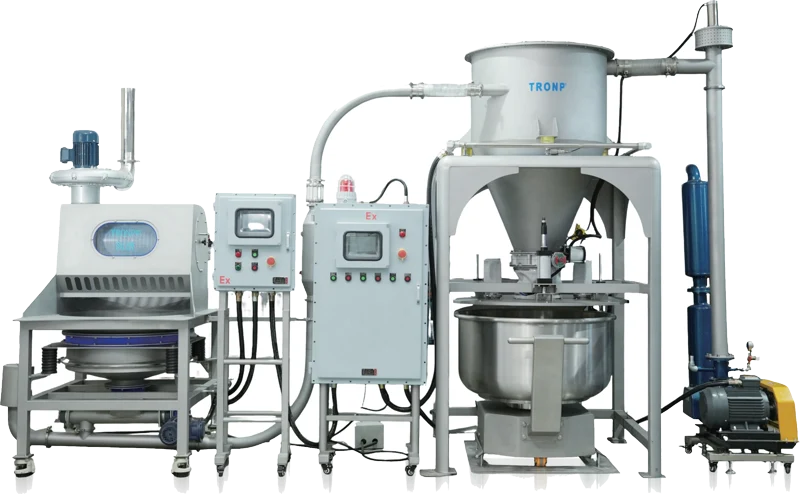
The following is a process organization schematic. Discharge methods and supporting equipment are selected based on on-site stations; not every project requires a complete configuration.
Three selection directions, centered on your operating method.
Bowl-tilting discharge required
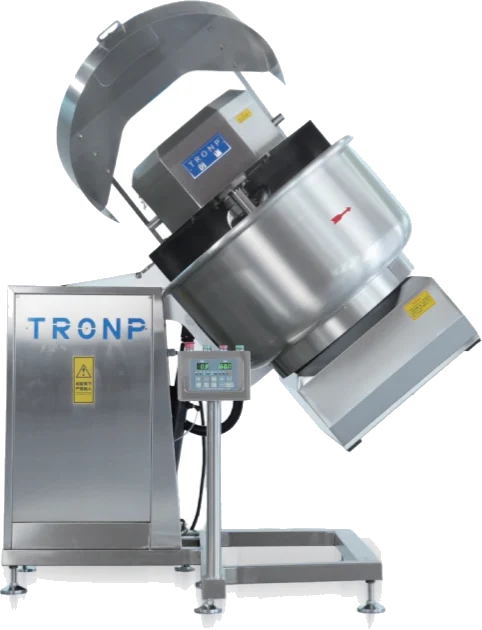
Smart tilting dough mixer
Discharge is completed by the bowl-tilting action. When selecting, focus on checking receiving container height, tilting clearance, and operating position. The manual lists models in multiple capacities, which can be compared based on current batches and future expansion plans.
Dough temperature management required
Constant-temperature smart dough mixer
Dual temperature-controlled water circuits, metered water addition, and recipe storage provide the equipment foundation for production that needs to record and reuse process parameters. The unit footprint and on-site water and power conditions should also be considered.
Independent receiving process already in place
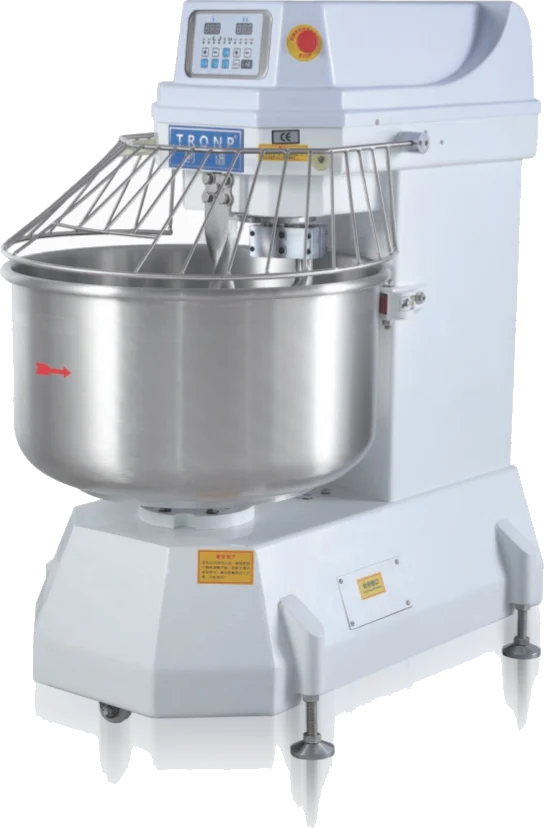
TP standard dough mixer
Select capacity based on daily dough mixing. This is suitable for a configuration approach where the standalone machine station is defined first, followed by coordinating manual labor or other equipment for handoff. The subsequent discharge method should be confirmed together with the actual workflow.
Representative models—first compare the capacity you actually need.
The table below excerpts dry flour capacities and rated power from the manual for preliminary screening. Dry flour capacity does not equal total dough weight and does not directly represent hourly output.
| Series / Direction | Model / Equipment | Capacity (per manual) | Rated power |
|---|---|---|---|
| Tilting series | TP-90FBB | Dry flour 50 kg | 6.75 kW |
| Tilting series | TP-130FBB | Dry flour 75 kg | 11.25 kW |
| Bowl-Tipping Series | TP-220FBB | Dry flour 125 kg | 18 kW |
| Bowl-Tipping Series | TP-300FBB | Dry flour 150 kg | 21 kW |
| Constant-Temperature Series | TP-220BS | Dry flour 125 kg | 18 kW |
| Constant-Temperature Series | TP-300BS | Dry flour 150 kg | 21 kW |
| Standard Series | TP-50KG | Dry flour 50 kg | 5.25 kW |
Parameters are excerpted from the TRONP 2026 Product Manual. They are used here for preliminary selection; specific specifications, configurations and applicable processes are subject to technical confirmation.
Let recipe records follow every production batch.
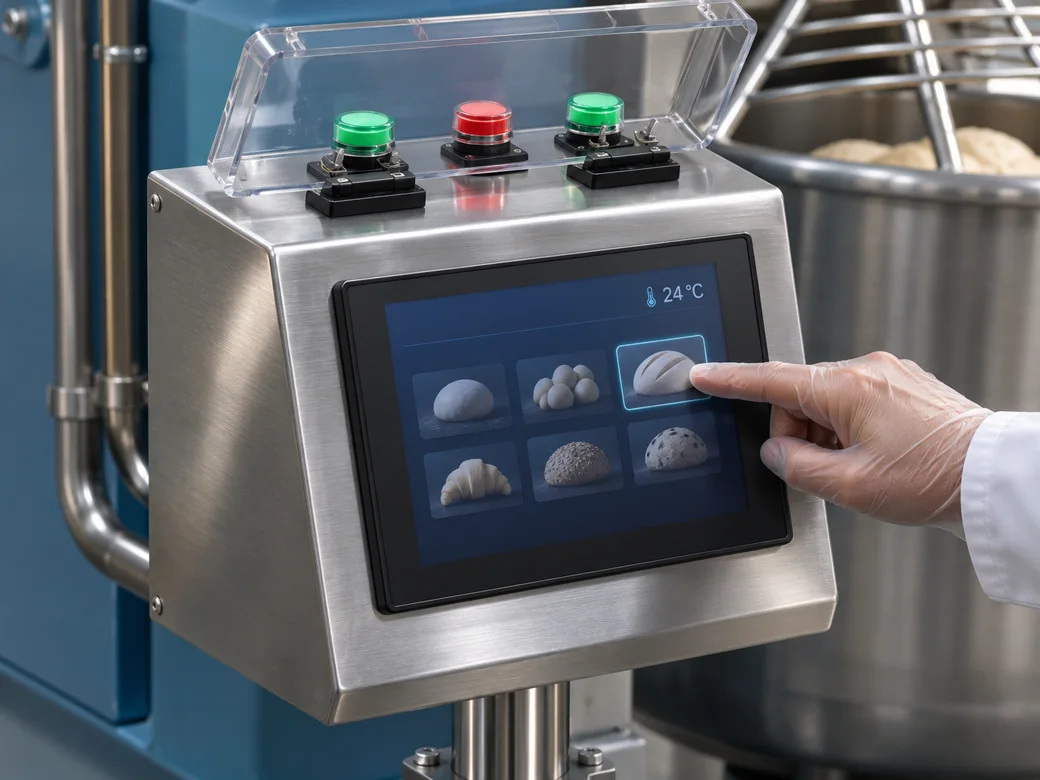
If different recipes need to be switched on the same production path, flour usage, water addition, mixing process and dough discharge temperature can be recorded simultaneously. The recipe management and quantitative water addition functions of the Constant-Temperature Smart Series can be incorporated into this batch management process.
- First confirm the match between equipment and process with actual recipes.
- Include material changeover, cleaning and transfer time in production scheduling.
- Check the discharge space against the dimensions of the receiving container.
Organize the key conditions for the central kitchen.
Before selection communication, you can itemize the following conditions and supplement them with actual data to facilitate confirmation of equipment and configuration.
- Record each batch’s dry flour usage and target dough quantity
- Organize main recipes and dough discharge temperature requirements
- Measure the height and opening dimensions of the receiving container
- Mark the bowl-tipping area and dough cart transfer route
- Confirm on-site water, electricity and cleaning conditions
- Need lifting, conveying or other production line support
Confirm these details again before selection.
How do I choose between the Bowl-Tipping Series and the Constant-Temperature Series?
First determine the main requirement. If the focus is dough discharge and transfer, compare bowl-tipping equipment first; if temperature management, quantitative water addition and multiple recipes are needed, evaluate the Constant-Temperature Smart Series. The final decision should be based on actual recipes and workstation layout.
Can daily output be calculated directly from equipment capacity?
It cannot be converted directly. The process time per batch, ingredient loading, discharge, recipe changeover, cleaning and the receiving rhythm of subsequent workstations must also be included. It is recommended to first record the actual production cycle.
What on-site dimensions need to be provided in advance?
Provide the workshop floor plan, doorway and passage dimensions, receiving container dimensions, and receiving height of the next workstation, and mark the locations of water and electricity. For bowl-tipping equipment, the motion range and operating space should also be checked.
Parameter and equipment basis: Manual pages 17–18 (Constant-Temperature Smart), pages 19–22 (Smart Bowl-Tipping), pages 25–26 (TP Standard Model), pages 27–28 (Lifting Series).
The page numbers in the text refer to the printed page numbers of the manual. The application recommendations are selection guidelines organized based on equipment functions, and the scenario diagrams do not represent delivered customer cases.